
I see what your body is compensating for, not just whether you can do it
As you move, I notice where alignment is lost or where another part of the body is covering the gap, the part you cannot feel from inside the movement.
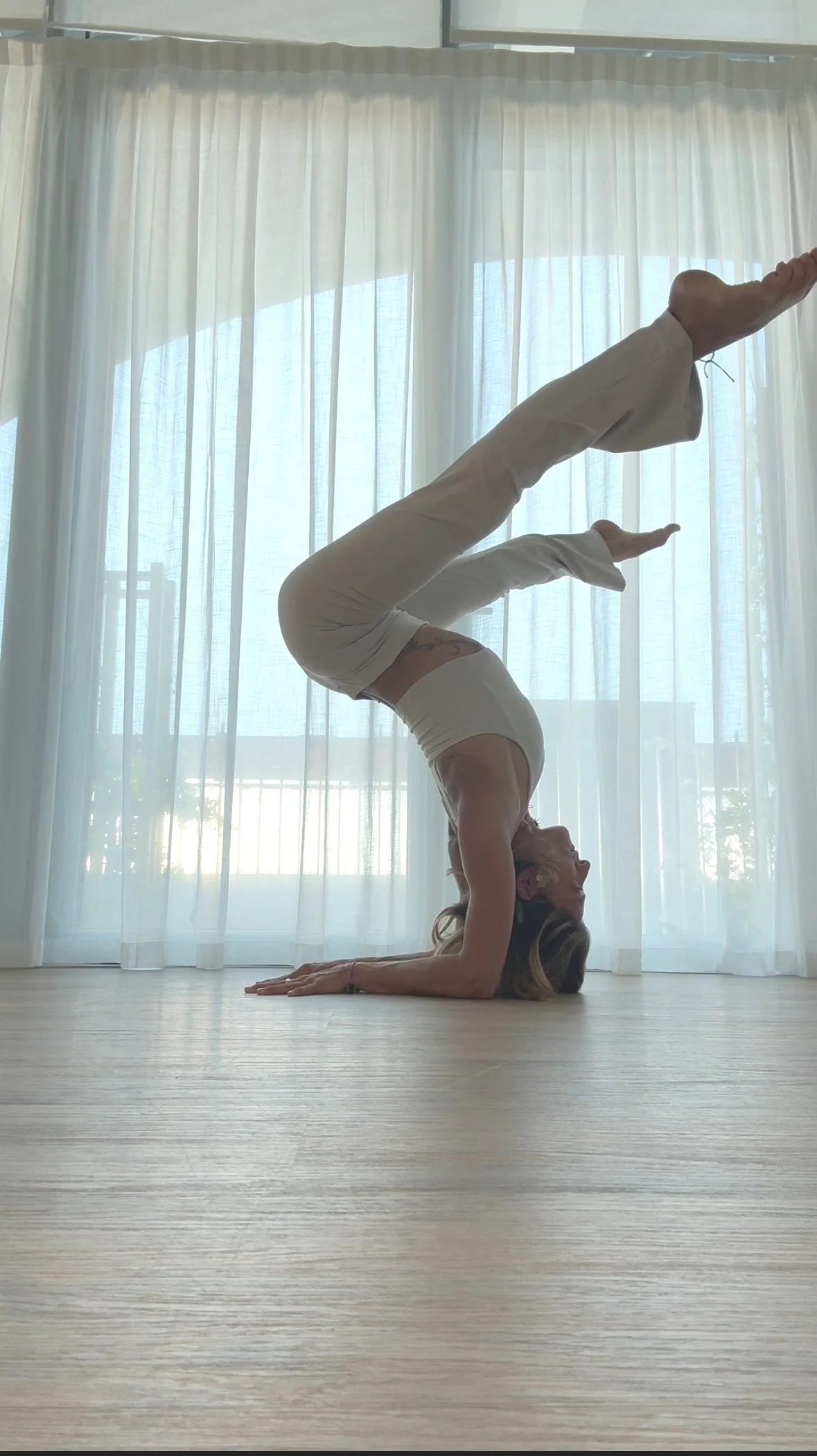
Private Inversion Training
Sirsasana, Pincha Mayurasana, handstand: build the strength, technique and trust you need to approach the shape.
Be observed while you practise, receive guidance on where you stop and work with exercises and progressions adapted to your body. Whether you are starting out or want to move past a point where you have been stuck for a long time.
The fastest way to progress is not trying harder. It is knowing exactly what to train.
Sound familiar?
You can watch more tutorials, repeat the same drills and keep trying. But when you don't know what is actually holding you back, it's hard to know what to train, what to change and when to progress.
You want to learn an inversion, but you don't know which preparations actually suit your level.
You repeat the shape without knowing whether strength, mobility, technique or trust is missing.
You'd like someone to personally watch your alignment, your entries and how you distribute weight.
The body may be ready, but the fear of falling or losing control keeps stopping you first.
You want to move from an occasional result to a capacity you understand, sustain and develop.
You don't need another generic progression. You need to understand what your next step is.
The value of an outside eye
You can't always see where alignment is lost, which part of the body is compensating, or why a strategy keeps failing.
In 1:1 work I observe your body and turn what I see into concrete guidance.
As you move, I notice where alignment is lost or where another part of the body is covering the gap, the part you cannot feel from inside the movement.
The next step isn't generic: it depends on what I see is missing in you today, not a one-size-fits-all sequence.
Not later, with a cool head, while it is still there, what is really feeding it.
Clarity turns random attempts into a practice you know how to develop.
What we build together
We start from your level, the inversion you want to build and where you struggle today.
We look at strength, mobility, stability, coordination, technique and your response to fear.
We select drills, preparations and attempts suited to your body and your goal.
We review alignment, weight distribution, entries, exits and falls directly in the shape.
You leave with a clear direction and tools you can take back into your own practice.

Your goal
The work can include:
We start from the capacity you want to build and the body you're building it with.
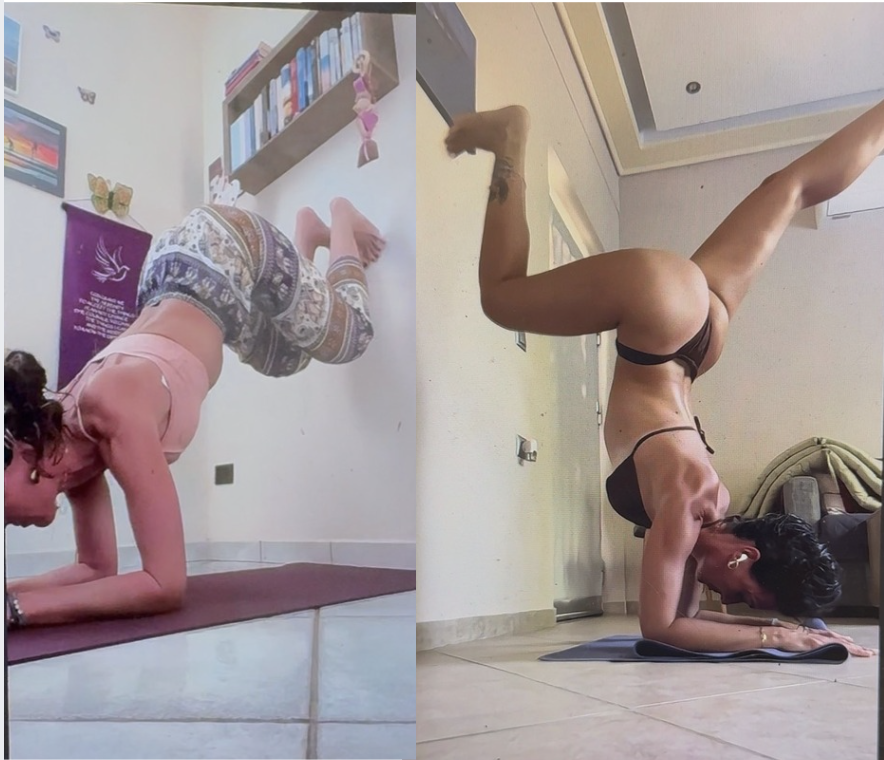
Watch the people who have already walked this path.
From their practice
Not a private class, a path
A private class can let you practise alongside a teacher. This work makes visible what you can't yet read on your own.
Every cue comes from what happens in your body, in your attempt and in the shape you want to build.
My role is not to make you dependent on my feedback. It's to help you build enough understanding to know what to watch, what to train and how to continue.
The path works when you need to guess less and less, and have more and more tools to lead your own practice.
THE PATH · THREE MONTHS
Repeating the same attempt, not knowing whether you lack strength, mobility or just the courage to stay one second longer.
Or you can know exactly what to train, feel the progress week after week, and find yourself one step from the shape that today feels far away.
strength, mobility, technique or trust, instead of guessing.
for an alignment you cannot feel on your own.
without letting fear decide for you.
whenever you want.
Not because fear disappears.
But because it is no longer the one deciding whether you try.
FAQ
No. We can start from the preparation needed for your first inversion, or work on a shape already in your practice.
The next step
We can look together at where you are, understand what is missing and build a precise direction for your practice.
Tell me which inversion you want to build and where you feel stuck.