Build a body you can trust
Develop the strength, mobility and stability you need to support your weight and approach inversions with greater control.
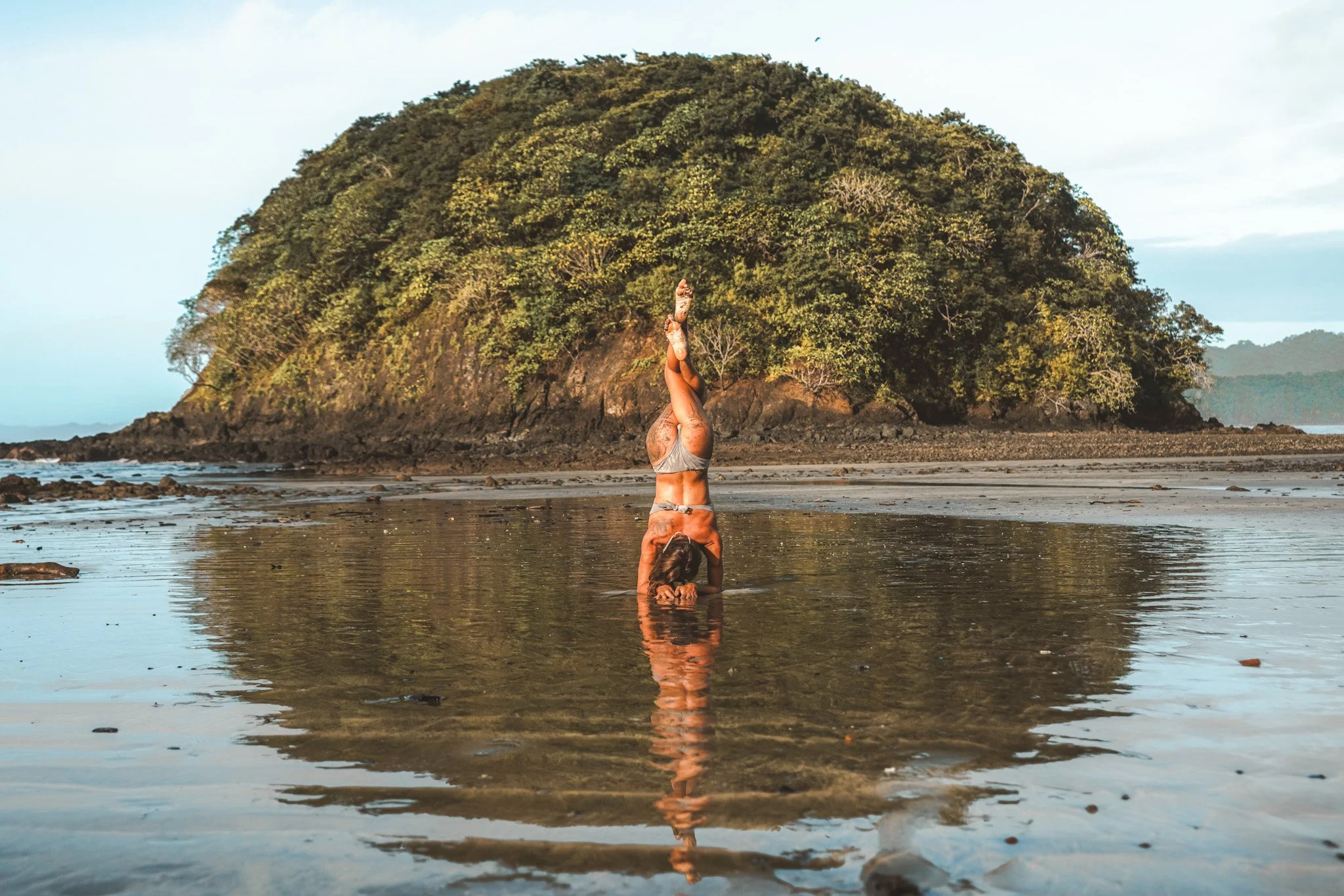
Inversions train the body to hold you when your references change. You build strength, mobility, coordination and control. You learn to approach the fear of falling, understand what is missing and turn random attempts into a practice you know how to develop.
Whether you start from zero or keep getting stuck at the same point, what feels impossible today can be built.
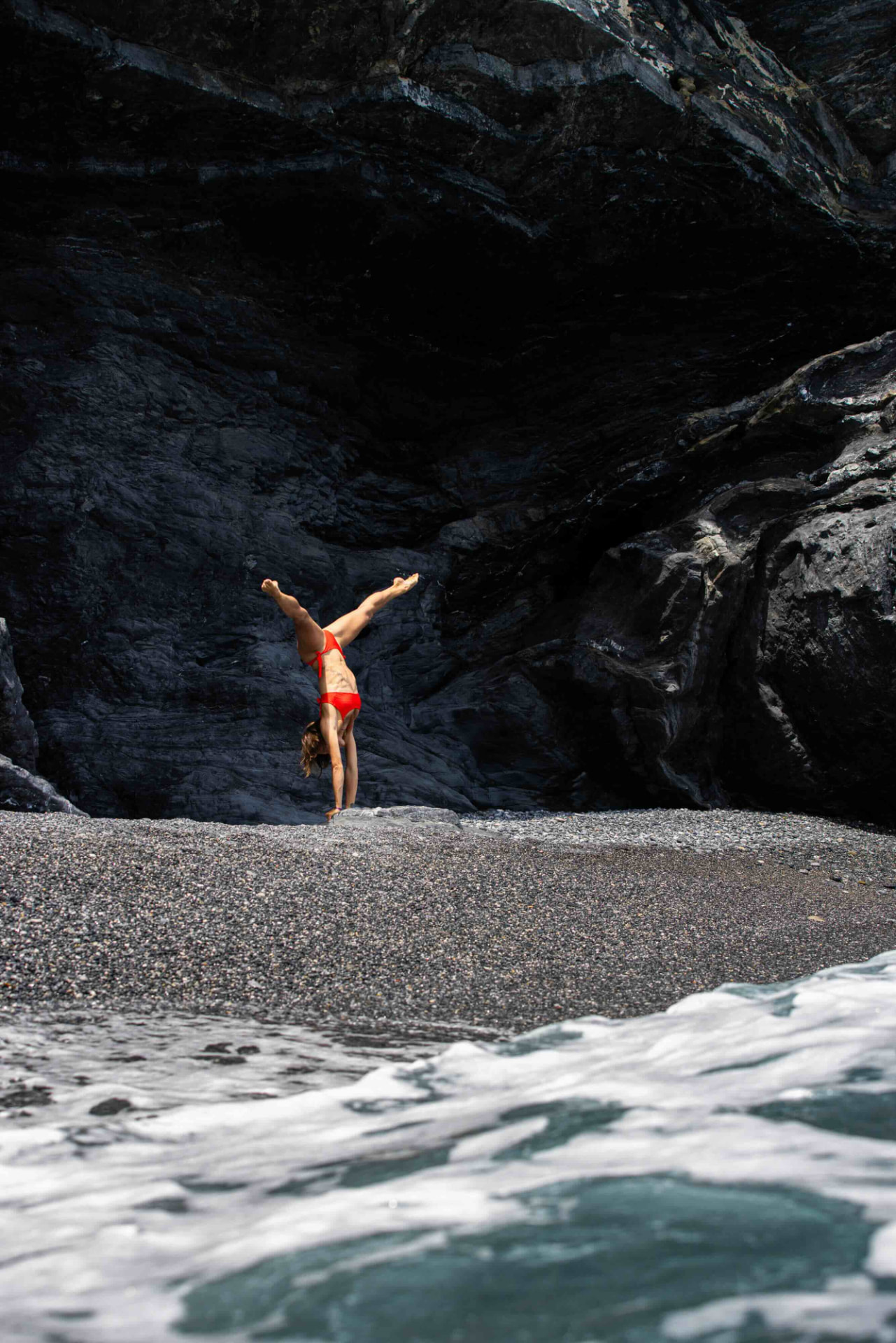
Develop the strength, mobility and stability you need to support your weight and approach inversions with greater control.
Understand what to train, in what order, and when it is time to progress or consolidate.
Do not wait for fear to disappear. Learn to approach it gradually, stay present and keep trying.
Every new capacity becomes evidence that a limit can be explored, trained and redefined.
Inversions are not a talent you either have or do not have. They are a capacity built through clear progressions, useful feedback and deliberate practice at your edge.
The position shows what is missing,strength, mobility, stability, coordination or breath control,so you know what to train next.
Build the foundations first. Each new capacity becomes the base for the next stage of your practice.
Approach fear gradually, remain in the attempt and use your breath to stay clear without forcing beyond your limits.
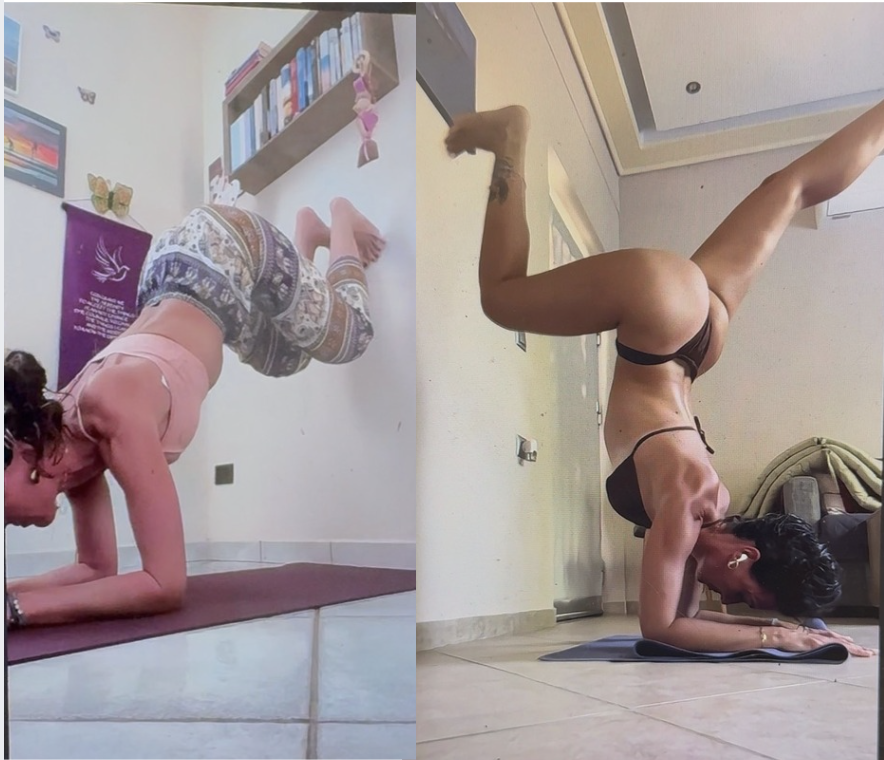
Not an overnight transformation. Not the result of repeating random attempts. Clear progressions, technical feedback and the willingness to keep returning.
What feels impossible today becomes the next capacity you know how to build.
START BUILDING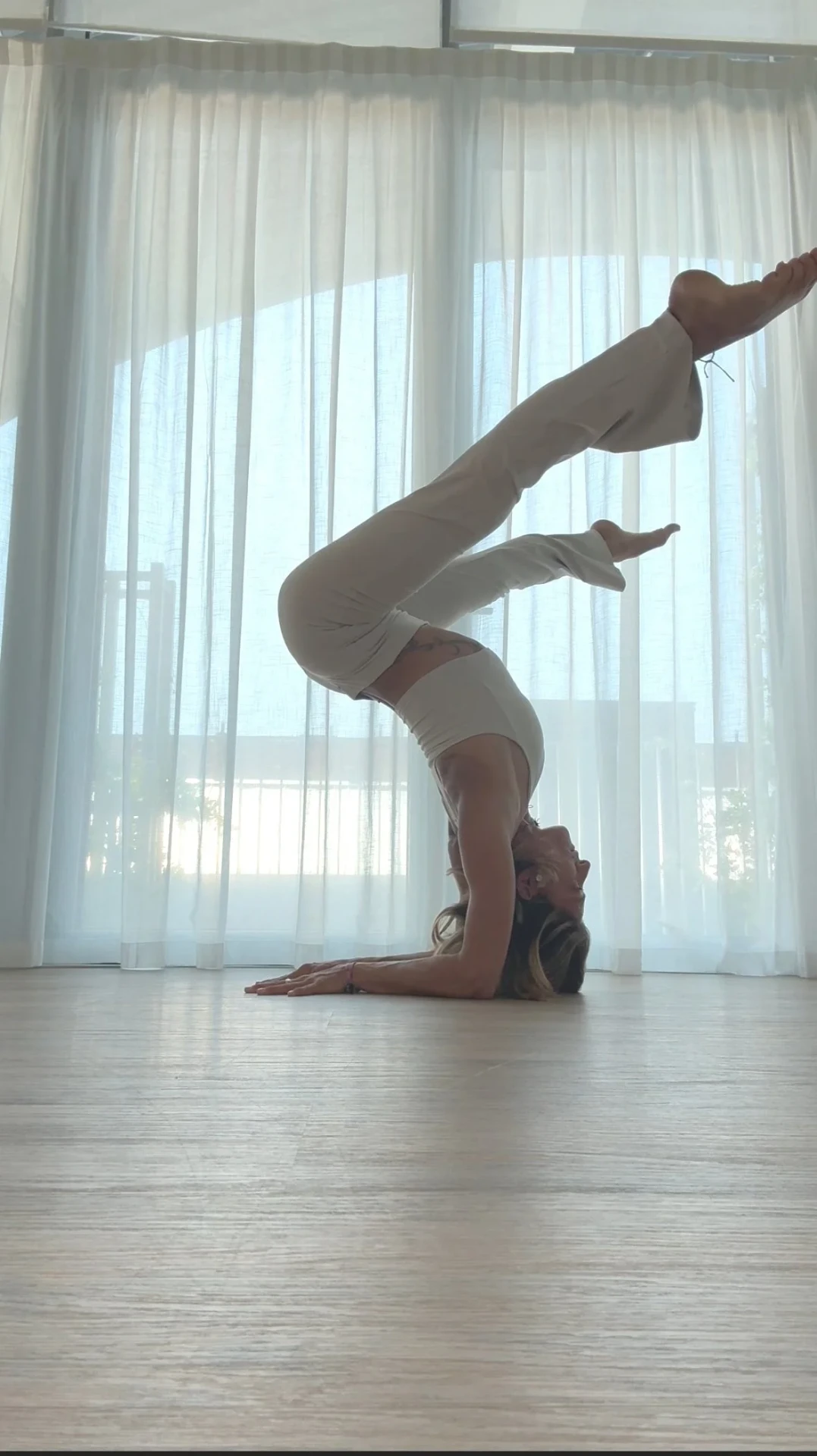
Confidence grows as you see yourself develop strength, learn new skills and do what once felt impossible.
Stop treating fear as an automatic signal to retreat. Learn to read it, respond to it and keep moving without overriding yourself.
Every attempt trains your capacity to stay with uncertainty, adjust your strategy and take the next step before you know how it will end.
The inversion is the practice. What becomes available through it can change how you meet the rest of your life.
Watch the people who have already walked this path.
Work directly with Francesca through a personalized journey built around your body, your current level and the point where you feel stuck.
Going upside down is not reserved for people who feel no fear.
A private journey built around your body, your level and the point where you feel stuck.
“An unforgettable experience”
I am not one to leave reviews, but this time I could not help it. I bought this inversion package in September with low expectations, because I had been practising for years with no results. With Franpesca I finally understood what preparatory work really means. I found an effective, step-by-step method that respects patience, alignment and execution. The course is structured into modules, all important: from the method to breathing to the first inversion steps. I have never had results like these before. Francesca is incredibly supportive even in difficult moments, from limiting thoughts to the fear of falling. The journey is long, but give yourself a chance. Great results are possible online too. For me it was a real surprise. Saying thank you feels like an understatement.
“You change, and everything changes.”
Franci's course is something else. It guides you with apparent simplicity towards something that is not simple at all. It takes practice, repetition, redundancy, time, trial and error... but it leads to the beauty of reaching a different awareness of your body, your mind and your breath. In the end, that flexibility and lightness you saw from the outside becomes yours, and settling into your body reflects that change, that journey. I am loving this upside-down version of myself, who steps onto the mat and comes out a little different every time. Time is needed because it does not all happen at once. Try it, and be surprised by yourself and your journey.
“From Spiritual Journey to Inversions onward”
I discovered Franpescayoga on Instagram. Despite my scepticism about this kind of approach, she struck me immediately. I started practising by following her social page, until one day I decided to join her challenge (and then course) 'Spiritual Journey To Inversion'. That is where the love began: for her, her way of teaching, and for myself. It is incredible. Even though I have never met her in person, somehow it feels like I have. Francesca, in her simplicity, goes straight to your heart. Her enthusiasm and that recharging energy fill you every time you follow her. I am not letting go. I can only say thank you for this new, exciting chapter of my life.
Everything people usually look up before going upside down, explained without mystery and without shortcuts.
Yoga inversions are the shapes where your head sits below your hips: from legs up the wall and downward dog to Sirsasana, Pincha Mayurasana and handstand.
The family is wider than most people imagine: alongside the three balances — headstand (Sirsasana), forearm stand (Pincha Mayurasana) and handstand — sit downward facing dog, a standing forward fold, dolphin and legs up the wall.
They are a family of positions, not a level. Some belong to your first day of practice, others take years.
Going upside down changes your point of view before it changes your body.
For shoulder and core strength, mobility, coordination and spatial orientation, and to train staying calm in a situation that feels uncomfortable but stays predictable.
The less obvious half is the second one: they put you in front of something uncomfortable in a predictable way. Fear arrives, you stay, you breathe, and you learn how you answer when something feels like too much. That part does not stay on the mat.
Start on the floor: load your hands and forearms in plank, downward dog and forearm holds before you go to the wall.
The reason is simple: wrists and shoulders need to know the load before they also have to balance it. Then you build the shape — body line, ribs and pelvis, pushing away from the floor through the shoulders — and only then do you go upside down, first with the wall and later away from it.
If you would rather follow an ordered progression than stitch loose videos together, the inversion course is built for exactly that.
You need both. Strength holds the shape, shoulder and upper back mobility let you bring your arms overhead without arching your lower back.
The proportions change from body to body. Plenty of people are strong enough and still cannot bring their arms overhead without arching the lower back: for them the work is shoulder and upper back mobility.
Others have wide range and no structure holding it: for them the work is strength and control. Knowing which one you are is already half of the progression.
Learn the exit before the entry: turning out to the side, placing one foot down, using the wall as a way out. Knowing how to exit, and how to use a prop, can make fear more manageable — it does not have to disappear before you practise.
As long as exiting the shape is unknown, your body will not trust the push: the fear is not irrational, it is missing information.
You learn to turn out to the side, to place one foot down, to use the wall as an exit and not only as support. With clear references fear can become less dominant, and confidence builds progressively. For Francesca fear is not something to fight: it is something to listen to and work with, step by step.
The other half is breathing. Holding your breath is the automatic response; breathing while upside down is the thing you train — and it is one of the signals Francesca reads to see whether someone is ready for the next stage.
Trust does not arrive before the practice. It comes from the evidence you give yourself.
The three main ones are Sirsasana (headstand), Pincha Mayurasana (forearm stand) and handstand.
Sirsasana, headstand, where most of the weight stays in the forearms. Pincha Mayurasana, forearm stand, which asks for shoulder mobility and a lot of stability. Handstand, the most technical of the three for balance and alignment.
Around them sit supported inversions and preparations, which make up most of the real work, even for people who have practised for years.
In Sirsasana the head rests on the floor and the forearms carry most of the weight; in Pincha Mayurasana the head stays lifted and the forearms and shoulders carry all of it.
Sirsasana has a wider base and one more point of contact, so it usually comes first. Pincha Mayurasana removes that contact: it asks for shoulders that open overhead, forearms that press down and a core that keeps the ribs closed.
The pattern I see most often is people skipping shoulder mobility work and stalling exactly here: the strength is there, but the hips cannot travel over the elbows.
It depends on your starting point and consistency: with a clear progression and a few sessions a week, this is measured in months, not days.
It depends on where you start, how often you practise and how targeted the practice is. People who practise a few times a week with a clear progression usually change faster than people who practise a lot without direction.
Nobody can give you a date. What can be removed is randomness: knowing what you are training today, and why.
Warm your wrists and shoulders, practise on a stable surface with clear space, build the exit alongside the entry, and increase one variable at a time.
Warm your wrists and shoulders before loading them. Practise on a stable surface with free space around and behind you. Build the exit alongside the entry.
Increase one thing at a time — either duration or difficulty, never both on the same day. And stop when the shape breaks, not when the strength runs out.
Some conditions call for caution or make inversions unsuitable: neck or back issues, uncontrolled high blood pressure, glaucoma and other eye conditions, inner ear and balance disorders, pregnancy, or a recent wrist, elbow or shoulder injury.
In those cases speak with the healthcare professional who follows you first. This page describes a movement practice: it is not medical advice and it does not replace a personal assessment.
The inversion course gathers all of this into one ordered path: preparation, strength, technique and working with fear, step by step.
Lifetime access.